Zombie books can be a lot darker than just people running from the undead. Some of the best ones get into isolation, fear, grief, paranoia, and what people are willing to do when everything falls apart. These are the ones that lean more horror than action.
If you like your books dark in general, I also have a list of Modern Gothic: Stories Haunted by the Past.
🧟♂️ The Rising by Brian Keene
These aren’t your typical slow-moving zombies. They’re intelligent, violent, and cruel, which makes the whole thing feel even worse. There is also a demonic side to what is happening, so this one feels more like straight horror than a normal outbreak story.
The Rising: Author’s Preferred Edition
The story of Jim Thurmond, a determined father battling his way across a post-apocalyptic zombie landscape, to find his young son. Accompanied by Martin, a preacher still holding to his faith, and Frankie, a recovering heroin addict with an indomitable will to survive, Jim travels from state to state and town to town, facing an endless onslaught of undead hordes, and the evils perpetrated by his fellow man.

🧟♀️ Dead Sea by Brian Keene
A group of survivors trapped on a boat with zombies everywhere is already a pretty bad situation. There is nowhere safe to go, and the isolation starts becoming almost as dangerous as the undead themselves.
Dead Sea
The city streets are no longer safe. They are filled instead with the living dead, rotting predators driven only by a need to kill and eat. Some of the living still struggle to survive, but with each passing day, their odds grow worse.

🧟♂️ The Collapse by Alice B. Sullivan
This one starts while everything is still falling apart. Instead of jumping ahead to people already living in the apocalypse, you get to watch the outbreak happen and see how quickly normal life disappears. If that part of the story is what you like most, you might also like my dystopian book recommendations.
The Collapse (Aftermath Series)
Karen Gallagher is a mother, a wife, and a scientist, and her past is catching up to her. As the world falls victim to a viral pandemic, Karen struggles to keep her daughter safe, forced to turn to the people who burned her all while harboring an awful secret.

🧟♀️ And Then I Woke Up by Malcolm Devlin
This one is a little different because a lot of the horror comes from not knowing what is real. You start questioning what the characters are seeing, what they have been told, and whether the whole situation is what it seems.
And Then I Woke Up
In a world reeling from an unusual plague, monsters lurk in the streets while terrified survivors arm themselves and roam the countryside in packs. Or perhaps something very different is happening. When a disease affects how reality is perceived, it’s hard to be certain of anything…

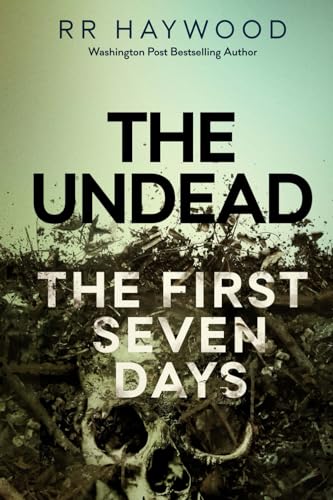
🧟♀️ The Undead: The First Seven Days by R. R. Haywood
Howie is home when a zombie outbreak starts spreading across Europe. Within hours, everything is falling apart, and he has to figure out how to survive while trying to reach his family. This one follows the outbreak from the very beginning, which is always one of my favorite parts of a zombie story.
The first week of Howie’s zombie-apocalypse story, collected in one volume for readers who want to keep going beyond Day One.
🧟♂️ Handling the Undead by John Ajvide Lindqvist
The dead start waking up in Stockholm, but this is not really an action-heavy zombie story. It focuses more on the families dealing with loved ones who have come back and what happens when grief makes it hard to let go.
Handling the Undead
Something peculiar is happening. While the city is enduring a heat wave, people are finding that their electric appliances won’t stay switched off. And everyone has a blinding headache. Then the terrible news breaks – in the city morgue, the newly dead are waking.

🧟♂️ The Walking Dead Compendium One by Robert Kirkman
If you already like The Walking Dead, this is an easy one to add. The first compendium collects a huge chunk of the original comic series, so there is a lot here to read. It also gets into the part of zombie stories I usually find the most interesting: what happens to people when survival becomes more important than almost everything else.
The Walking Dead: Compendium One
The first eight volumes of the fan-favorite, New York Times bestselling series—collected into one massive paperback. Follow Rick Grimes from his awakening in a deserted hospital through the early days of survival, including Hershel’s farm and the rise of the Governor, in over 1,000 pages of gripping post-apocalyptic horror.

Why Horror-First Zombie Stories Hit Different
The zombie books I like most are usually about more than surviving the undead. They are about what happens to people when the rules disappear, fear takes over, and nobody really knows who they can trust anymore.
This post may contain affiliate links. If you make a purchase through one of these links, I may earn a small commission at no additional cost to you.