Lately, I’ve been thinking about war.
When the world feels tense, uncertain, or heavy, it’s hard not to. And while real-world conflict is tragic and complicated, there’s another space where we explore these themes in a completely different way: around a table, with cardboard, dice, and strategy.
War-themed board games are one of the most fascinating corners of the hobby. They’re not about glorifying violence. At their best, they’re about decision-making under pressure, logistics, alliances, timing, and consequence. They let us examine history and power in a contained, thoughtful way.
If you’re curious about war board games — whether you’re a history lover, a strategy fan, or just someone looking for something deeper than a party game — here are some of the best ones still available today.
Memoir ’44
Memoir ’44 is one of the best entry points into historical war gaming. It focuses on World War II and uses a hex-based battlefield with scenario-driven play. Many of the scenarios are inspired by real historical engagements, including D-Day.
What I love about this one is that it feels tactical without being overwhelming. You’re making battlefield decisions — when to advance, when to hold position, when to flank — but you’re not buried under a rulebook the size of a college textbook.
Why it works:
- Straightforward rules
- Short, scenario-based battles
- Strong historical flavor
- Great for beginners
If you’ve ever been curious about war games but felt intimidated, this is a smart place to start.
Step into the shoes of WWII commanders and engage in thrilling battles with Memoir ’44, a unique historical board game featuring plastic Army men and authentic scenarios.

Axis & Allies
Axis & Allies is the grand strategy experience.
Instead of controlling a small unit on a battlefield, you’re managing entire nations during World War II. Production, naval fleets, air forces, alliances — it’s all on the table. This is the game that can take over a weekend in the best way possible.
It’s big. It’s dramatic. It’s the kind of game where every decision feels weighty because you’re thinking several turns ahead.
Multiple editions are still in print, which makes it accessible for anyone ready to dive into large-scale strategy.
Take control of either an Axis power or an Allied nation.
Includes: 160 plastic miniatures with resealable bags for storage.

Twilight Struggle
Twilight Struggle shifts the battlefield from bullets to ideology.
This two-player game centers on the Cold War. There are no tanks rolling across Europe. Instead, players influence countries, trigger historical events, and carefully manage global tension while trying to avoid nuclear escalation.
It’s cerebral and intense. Every card represents real historical moments. You start to see how global politics is often a game of positioning, pressure, and perception.
If you enjoy history and psychological strategy, this one is widely considered a masterpiece.
Twilight Struggle is a two-player game simulating the forty-five year dance of intrigue, prestige, and occasional flares of warfare between the Soviet Union and the United States. The entire world is the stage on which these two titans fight to make the world safe for their own ideologies and ways of life. The game begins amidst the ruins of Europe as the two new “superpowers” scramble over the wreckage of the Second World War, and ends in 1989, when only the United States remained standing.

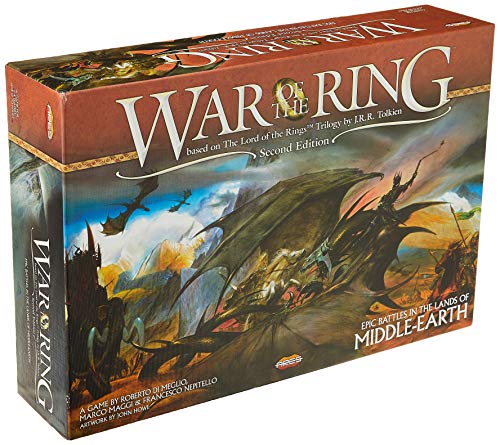
War of the Ring (Second Edition)
War of the Ring brings epic fantasy into the war game space.
Set in the world of The Lord of the Rings, one player commands the Shadow armies while the other leads the Free Peoples. It combines military strategy with narrative tension, creating a sweeping, cinematic experience.
This is a heavier game. It’s complex and long, but for Tolkien fans or players who want scale and immersion, it’s hard to beat.
It’s also a reminder that war games don’t have to be strictly historical to explore themes of power, alliance, sacrifice, and risk.
Take command of the fate of Middle-earth in this epic strategy game of war and destiny. Lead the Free Peoples—Rohan, Gondor, Rivendell, and the Fellowship itself—in a desperate stand against Sauron’s rising darkness. Or assume the mantle of the Shadow, unleashing Orcs, Trolls, and Ringwraiths to hunt the Ring-bearer and conquer the realm. Command vast armies, shape legendary battles, and decide the destiny of the Third Age.
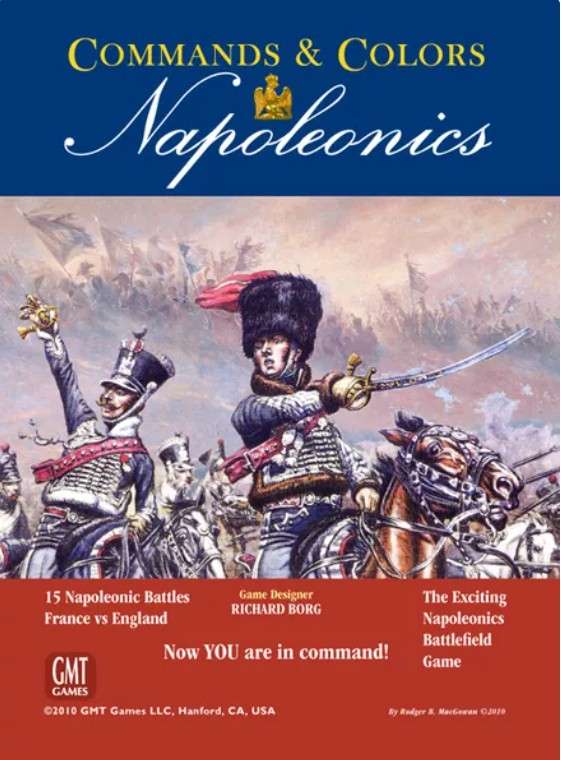
Commands & Colors: Napoleonics
If World War II isn’t your preferred era, Commands & Colors: Napoleonics takes players back to the early 19th century.
Line infantry, cavalry charges, battlefield positioning — this game uses a similar system to Memoir ’44 but dives deeper into historical nuance. It’s a satisfying mix of accessibility and depth.
For history enthusiasts who love studying different periods, this is a fantastic addition to a collection.
Commands & Colors: Napoleonics allows you to re-fight epic battles of the Napoleonic era. In this core volume, the focus is on the French and the British, two bitter rivals in the struggle for European preeminence during the time of Napoleon.
Risk (and Risk: Legacy)
Risk is the classic gateway war game.
Global domination. Dice-driven battles. Alliances formed and broken. Almost everyone has encountered it at some point.
If you want a more modern twist, Risk: Legacy permanently changes the board as you play. Stickers alter territories. Factions evolve. Decisions leave permanent marks. It’s a fascinating reflection on how actions have long-term consequences — even in games.
It’s simpler than some of the other titles on this list, but its staying power says something about our enduring fascination with strategy and control.
How will you shape your world? Every game you play will change every future game. Your actions — such as what factions you choose, what rules you break, adding a penalty or benefit to a die roll, and more — decide how the game evolves

A War of Whispers (Second Edition)
A War of Whispers flips the traditional war game on its head.
You’re not commanding armies directly. You’re not rolling dice for battlefield victories. Instead, you’re part of a secret society manipulating five warring empires from behind the scenes. You place influence, shift loyalties, and quietly steer outcomes — all while hiding where your true allegiances lie.
It’s less about brute force and more about long-term positioning. You’re betting on which factions will rise and which will fall, and every decision ripples outward. Timing matters. Secrecy matters. Patience matters.
If you’re drawn to the political side of conflict — strategy over spectacle — this is a sharp, thoughtful addition to the war game space.
A five-way proxy war. A War of Whispers Standard Edition is a competitive board game for 2 to 4 players. Five mighty empires are at war for the world, but you are no mighty ruler. Instead, you play a secret society that is betting on the results of this war while pulling strings to rig the results and ensure their bets pay off. A War of Whispers is a game of deep strategy, hidden agendas, and shifting loyalties.

Why War Games Still Matter
It’s important to say this clearly: real war is devastating. It affects real people in profound and painful ways.
Board games are not that.
War-themed games allow us to explore strategy, history, and systems without harm. They let us analyze decisions from a safe distance. They encourage critical thinking: resource management, long-term planning, risk assessment, alliance-building.
They can even spark curiosity about real history. A game about World War II might lead someone to read more about the era. A Cold War simulation might push a player to explore the politics behind the headlines.
At their best, these games are about understanding complexity — not celebrating destruction.
Final Thoughts
When the world feels uncertain, sometimes understanding strategy in a controlled setting can be grounding. Board games give us space to wrestle with big ideas safely. They remind us that decisions matter, timing matters, and sometimes restraint matters most of all.