
Getting into board games can be a little intimidating. You pick up a box because the game looks fun, open it, and suddenly you’re staring at a rulebook, piles of cards, tokens, boards and pieces with no idea where to start.
It doesn’t have to be that complicated.
These are 10 games I think work really well if you’re new to board gaming or trying to introduce someone else to it. They’re easy enough to learn without spending half the night reading rules, but they’re still games you’ll want to keep playing after you know what you’re doing.
I’ve played most of these with friends and family over the years, and several of them were the games that got us more interested in the hobby in the first place.
As an Amazon Associate I earn from qualifying purchases. This page contains affiliate links. If you purchase something after clicking a link, I may receive a commission at no extra cost to you.
One other thing before we get into the games: if I’m confused by a new rulebook, I usually look for a video. Watch It Played has been one of my go-to YouTube channels for learning games because Rodney Smith does a good job walking through the setup and rules without making things more confusing than they already are.
If you’re looking for more ideas for game night, I also have a list of fall board games for game night and a separate list of Christmas board games and holiday party games.
Catan
I was introduced to it back in 1998, when it was still commonly called The Settlers of Catan. It didn’t take me long to figure it out, and I went out and bought my own copy pretty quickly after that.
Players collect resources and use them to build roads, settlements and cities across the island. The rules aren’t difficult once you get through a round or two, but there’s enough strategy involved that the game doesn’t become boring once everyone knows how to play.
Trading is also a big part of it, which means you’re interacting with everybody instead of quietly staring at your own part of the board.
There are a ridiculous number of Catan versions and expansions now, but if you’ve never played before, I’d start with the regular base game.
Catan (Base Game)
Build roads, settlements and cities while collecting and trading resources. A classic strategy game that is easy to learn but still gives you plenty of decisions to make.

Ticket to Ride
My family was introduced to Ticket to Ride in 2013.
I’ll admit that when I first saw it, I thought it looked a little too simple. Then I actually played it and got over that opinion pretty fast.
Players collect train cards and use them to claim routes between cities. You also have destination tickets that give you points if you can connect the cities listed on them.
That’s basically enough to get you started.
There is strategy here, especially once people start taking the routes you wanted, but you’re not trying to remember twenty different things every turn. It also moves pretty quickly, and I almost always get to the end wishing I had just a few more turns.
If somebody told me they wanted one game to start a modern board game collection, this would be pretty high on my list.
Ticket to Ride Board Game
Embark on a journey across early 20th century North America, collecting train cards and claiming routes to expand your network and connect cities.

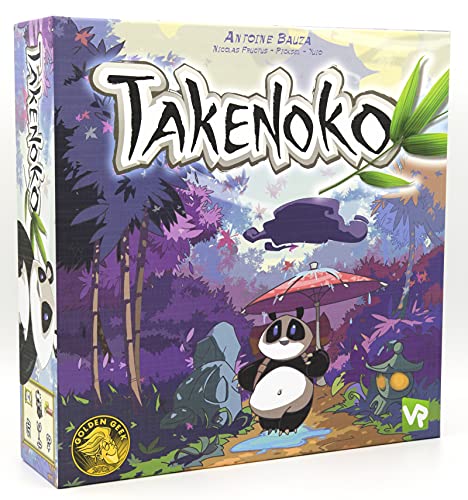
Takenoko
Takenoko is one of those games that looks good sitting on the table and isn’t difficult to explain once you start playing.
You’re building and irrigating a bamboo garden while trying to complete different objectives. There’s also a panda wandering around eating the bamboo you’re trying to grow, so you have to work around him along the way.
My family has played this one a lot. My daughter was already playing it with us when she was six, and it was one of those games that could easily turn into, “Okay, one more game before bed.”
It’s colorful, it’s not overly serious and there are enough different objectives that everyone can be working toward something a little different.
Takenoko Board Game
Build and irrigate a bamboo garden, complete objectives and keep up with a very hungry panda. Colorful, light strategy that works well for families.
Forbidden Island
Forbidden Island is a great beginner game if you don’t necessarily want everybody competing against each other.
This one is cooperative, so everyone either wins together or loses together.
You’re trying to collect four treasures and escape the island before too much of it sinks beneath the water. Every player has a different ability, so you actually have to talk to each other and figure out how you’re going to survive.
I discovered this one during a Barnes & Noble trip in 2012. I wasn’t convinced we needed another game, but the price was reasonable enough that we brought it home. We ended up playing two games back to back that same night.
It’s still one of the games I’d recommend to somebody who wants to try cooperative board games without jumping straight into something complicated.
Forbidden Island
A cooperative game where everyone works together to collect four treasures and escape before the island sinks.

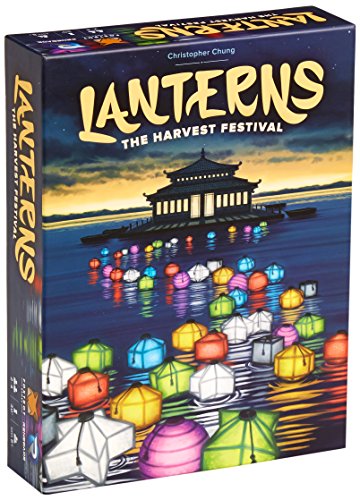
Lanterns: The Harvest Festival
My daughter picked out Lanterns at our local game store, and that day she proved she was the better gamer when she beat me three times in a row.
The game is built around laying tiles and creating a lake filled with colorful floating lanterns. Every time you place a tile, the colors on the different sides determine which lantern cards everyone receives.
You’re collecting sets and turning them in for points, so there’s some planning involved, but the turns themselves are simple.
The box isn’t huge and neither is the learning curve, but there’s a surprising amount of game packed into it.
Lanterns The Harvest Festival Board Game
A tile-laying game where players build a colorful lake of lanterns, collect cards and turn in sets for points.
Carcassonne
A friend introduced me to Carcassonne in 2008.
I remember protesting that I didn’t have all night to learn some new game. About five minutes later, we were playing.
That pretty much tells you why it’s on this list.
Players take turns drawing tiles and adding them to a growing landscape of roads, cities, monasteries and fields. You can place one of your meeples on certain areas to score points as those areas are completed.
One of my favorite things about it is that the board doesn’t exist when you start. Everyone creates it together as the game goes on, so the finished map is different every time.
It’s easy to learn, doesn’t take forever to set up and gives you enough decisions to keep it interesting.
Carcassonne Board Game
Build a medieval landscape one tile at a time with roads, cities, fields and monasteries. Easy to learn, quick to set up and different every game.

Azul
I didn’t intend to have so many tile games on this list, but tile games tend to be pretty easy to set up and teach.
Azul, Lanterns and Carcassonne all ended up on this list, but they don’t feel like the same game when you’re actually playing them.
In Azul, you’re choosing colorful tiles and arranging them on your board to build mosaic patterns. You score based on where those tiles are placed, but unused tiles can also cost you points.
It’s one of those games where the basic turn is really easy to understand. The strategy comes from deciding which tiles to take and realizing that your choices can mess up somebody else’s plans.
It’s also a great game for family gatherings when everybody needs something to do together instead of discussing whatever topic is about to start an argument.
Azul Board Game
Draft colorful tiles and arrange them into mosaic patterns while scoring points and trying not to waste tiles.

Pandemic
Yes, I know. The theme hits a little differently than it did when I first played it.
I was introduced to Pandemic in 2012 while visiting friends in Massachusetts. I had brought Forbidden Island with me, and that’s when I realized both games were designed by Matt Leacock. We ended up playing the two games over and over until the middle of the night.
Like Forbidden Island, this is cooperative.
Each player has a different role, and everyone works together to control diseases spreading across the world while trying to discover cures before everything gets out of hand.
There’s more going on here than in Forbidden Island, so I wouldn’t necessarily make it the very first modern board game you ever play. But once you’re comfortable with something simpler, it’s a good next step.
It’s also one of those games you learn better by actually playing than by trying to memorize the entire rulebook first.
Pandemic Board Game
A cooperative strategy game where players work together to control outbreaks and find cures before diseases spread across the world.

King of Tokyo
Sometimes you don’t want to build a peaceful little town.
Sometimes you want to be a giant monster and punch another giant monster in the face.
That’s King of Tokyo.
You roll dice to attack, heal, earn points and collect energy that can be used to buy special abilities. You can move into Tokyo for extra points, but being in Tokyo also means everybody else gets to attack you.
It’s fast, chaotic and very easy to get into.
It’s also one of those games where making ridiculous smashing noises while taking over Tokyo feels completely appropriate.
If you have people who think strategy games sound boring, this may be the one I’d pull out first.
King of Tokyo
Roll dice, attack other monsters, heal, collect energy and fight for control of Tokyo in this fast and chaotic strategy game.

Tsuro
Tsuro may be the easiest game on this entire list.
Everyone has a token on the board, and on your turn you place a tile that extends the path in front of you. Your token follows that path wherever it leads.
The goal is basically to stay on the board longer than everyone else.
That’s it.
Of course, once everyone’s paths start crossing, things get a lot more interesting because another player’s tile can send you somewhere you absolutely did not want to go.
I’ve rarely seen a game of Tsuro last very long, which makes it perfect when you want something quick or you’re trying to squeeze in one more game before everybody leaves.
Tsuro
A beautifully simple yet strategic tile-laying game where players guide their dragon along winding paths. Place tiles carefully, stay on the board, and outmaneuver your opponents—the last dragon standing wins.

You Don’t Have to Start With Complicated Games
Getting into board games doesn’t mean you need to start with a giant box, a two-hour rulebook explanation and a table covered in pieces nobody understands.
Start with something simple.
If you want competition and trading, try Catan. If you like route building, go with Ticket to Ride. If you’d rather work together, start with Forbidden Island. If you want something fast and ridiculous, pull out King of Tokyo. And if you just need a quick game that practically teaches itself, Tsuro is hard to beat.
Once you find the kind of game your group enjoys, there’s an entire ridiculous rabbit hole waiting for you.
And yes, that is how you eventually end up needing another shelf.
If there’s an easy board game you think should be on this list, let me know. There are definitely enough good beginner games for a second round.



One response to “10 Easy Board Games for Beginners That Are Actually Fun”
[…] 10 Board Games That Are Great If You Are New To The Hobby […]